

The Global Teacher Shortage: How Organizations Like 1MT Are Responding
Schools across Pakistan and the world share one quiet problem: there are not enough trained teachers to go around. The global teacher shortage is real, and it is growing. UNESCO says the world needs 44 million more teachers by 2030 to give every child access to primary and secondary education. Pakistan feels this gap too, with crowded classrooms and stretched school staff. For a working or aspiring teacher, this raises real questions: what is driving the teacher shortage, what training actually helps, and how are groups like 1MTCares (1 Million Teachers) responding in Pakistan? This piece walks through the numbers, the causes, and the training paths making a difference.
What Is Causing the Global Teacher Shortage?
The causes of teacher shortage come down to one pattern: teachers are leaving faster than new ones join. Low pay, heavy workloads, weak support, and few chances to grow push people out early. UNESCO data shows the primary teacher attrition rate worldwide nearly doubled, from about 4.62% in 2015 to more than 9% in 2022.
Fewer young people are entering the profession in the first place. Add rising student numbers, and the gap widens each year. Seven out of ten secondary teachers needed by 2030 will simply be replacements for those who already left. Sub-Saharan Africa carries the heaviest load, needing roughly 15 million of those 44 million teachers. But this isn't only a low-income-country problem; even well-funded school systems in Europe and North America struggle to recruit and keep qualified staff.
How Big Is the Teacher Shortage in Pakistan?
Pakistan's numbers tell a similar story. The country's Human Capital Index (HCI) sits at 0.41, below the South Asia average of 0.48, according to The World Bank. That score reflects how much a child born today can expect to achieve in health and education by adulthood, and it points to a real need for stronger teacher training and development across the country.
How Teacher Training Helps Close the Gap
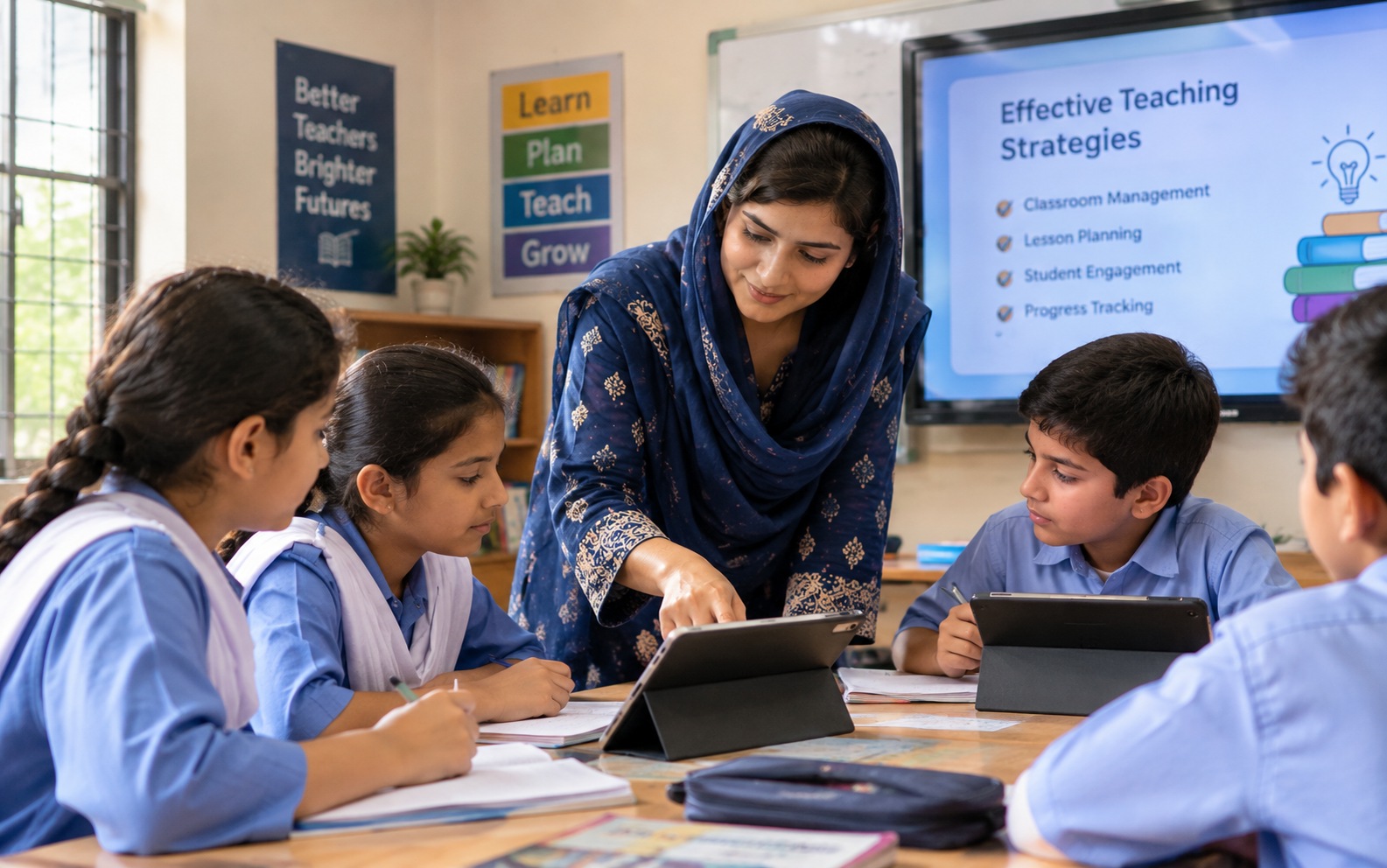
Good teacher training programs do more than fill an empty seat in a classroom. They change how a teacher plans a lesson, manages a room of thirty students, and responds when a student falls behind. Structured teacher training courses give new and experienced teachers a shared set of skills, so a school isn't relying on one or two strong individuals to carry the rest.
This is also where real teacher shortage solutions start to take shape: not just hiring more people, but helping the teachers already in the classroom grow, stay, and eventually lead. Teacher Training Programs That Empower Educators: How 1MTCares Creates Impact looks at how structured programs turn individual teachers into mentors for their own schools.
How 1MTCares Approaches Teacher Training in Pakistan
1MTCares runs its Black Belt Program, a structured teacher training path built around classroom management, lesson planning, and student engagement across several stages. Teachers who complete it can continue into the Mastermind Program or the HP Mentor a Teacher Program, which pairs newer teachers with experienced mentors for ongoing support.
In 2026, 1MTCares held its first graduation ceremony in Pakistan, where more than 300 educators completed their 1MT Blackbelt. Teachers came from schools including APS Okara, APS Bahawalnagar, ILH Ravi Chapter Lahore, ILH Jinnah Chapter Gujranwala, ILH Capital Chapter Islamabad, Sanjan Nagar School System Lahore, and Shah International School Peshawar, one of the largest structured teacher-training efforts recorded in the country so far.
1MTCares also runs an AI for Educators course, which helps teachers use classroom technology without losing the personal side of teaching. As Teacher Training in Pakistan: A Solution to the Country's Education Challenges points out, structured support like this is what turns good intentions into lasting classroom change.
What Does Teacher Education in Pakistan Look Like Today?
Teacher education in Pakistan usually starts with a formal qualification, followed by ongoing training once a teacher is already in the classroom. Many schools now treat a teaching certificate in Pakistan as a baseline, alongside continued learning through workshops, mentorship, and short courses.
What a solid training program usually covers:
Classroom management and lesson planning
Working with different learning speeds in one room
Basic use of technology and AI tools in teaching
Mentorship from experienced teachers
Ongoing check-ins, not just a one-time course
Training Courses for Teachers: In Person or Online?
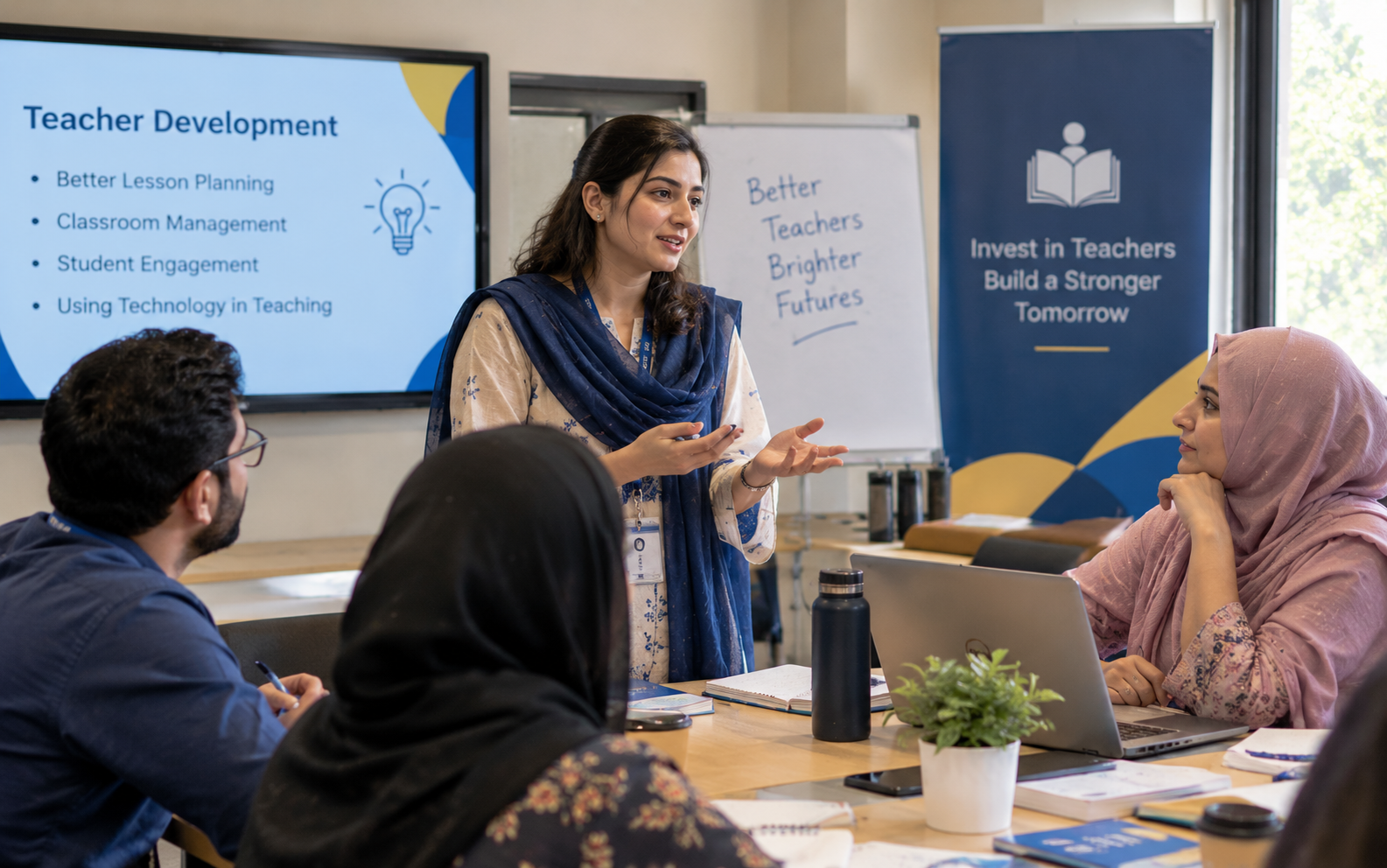
Training courses for teachers used to mean in-person workshops only. That has changed. Many programs now offer teacher training courses online, letting a teacher in a smaller city join the same course as someone in Lahore or Karachi. That matters in Pakistan, where not every teacher can travel for a multi-day workshop.
Is a Teaching Certificate Required to Teach in Pakistan?
Requirements vary by school and province, but most schools look for some form of teaching qualification or an ongoing training record before hiring or promoting staff. Beyond the paperwork, it's the continued training that actually shapes how a teacher performs in the classroom day to day.
Why Ongoing Training Matters More Than a One-Time Course
A single workshop rarely changes how a teacher works day to day. Real change tends to come from professional development for teachers that continues over time a course, then mentorship, then practice, then feedback. That's the model behind most structured teacher training efforts today, including 1MTCares' own approach.
A Gap That Closes With People, Not Just Numbers
The global teacher shortage won't close on its own. It closes when teachers are trained well, supported over time, and given room to grow into mentors themselves. Pakistan still has real gaps to fill, but it also now has thousands of teachers moving through structured programs built for exactly this problem.
For any teacher curious about how training paths like the Black Belt Program or the AI for Educators course actually work, 1MTCares' program pages are there to explore at your own pace no pressure, just information for teachers who want to know where the profession is headed.
Frequently Asked Questions
Is the 1MT Black Belt Program free to join?
Yes, the 1MT Black Belt Program is free to join and includes lifetime access to the platform. Teachers advance through belt levels, starting with White Belt, completing each stage before unlocking the next.
Do public and private school teachers face the same shortage pressures in Pakistan?
Not equally. Public sector teachers generally receive higher and more stable pay, while private school teachers often deal with lower salaries, insecure contracts, and fewer professional development opportunities, driving many to seek public sector jobs and causing higher turnover in private schools.
Is there a gender pay gap among teachers in Pakistan?
Yes. Research shows women in Pakistan's labor market, including teaching, earn on average 25–30% less than men, even among equally qualified staff, largely due to sector placement and structural pay practices rather than credentials.
How large is the teacher shortage in a specific province like Punjab?
Punjab alone has roughly 310,000 teachers currently in place against an estimated shortfall of about 125,000, according to 2024 reporting showing how the national gap plays out at the provincial level.
How does 1MT help solve the teacher shortage?
1MT trains and retains teachers through free, self-paced programs like the Black Belt Program, the Mastermind Program, the HP Mentor a Teacher Program, and the AI for Educators course. By building classroom skills and ongoing mentorship, these courses help reduce burnout and keep trained teachers in the profession longer.
