

What is Pedagogy? Definition, Meaning in Urdu, Types & Teaching Methods in Education
Every exceptional teacher has one thing in common: they understand how people learn, not just what to teach. That understanding has a name: pedagogy. Whether you are stepping into your first classroom or enrolling in a structured teacher training program, grasping the meaning, types, and real-world application of pedagogy is the single most transformative step you can take in your teaching career.
What is Pedagogy?
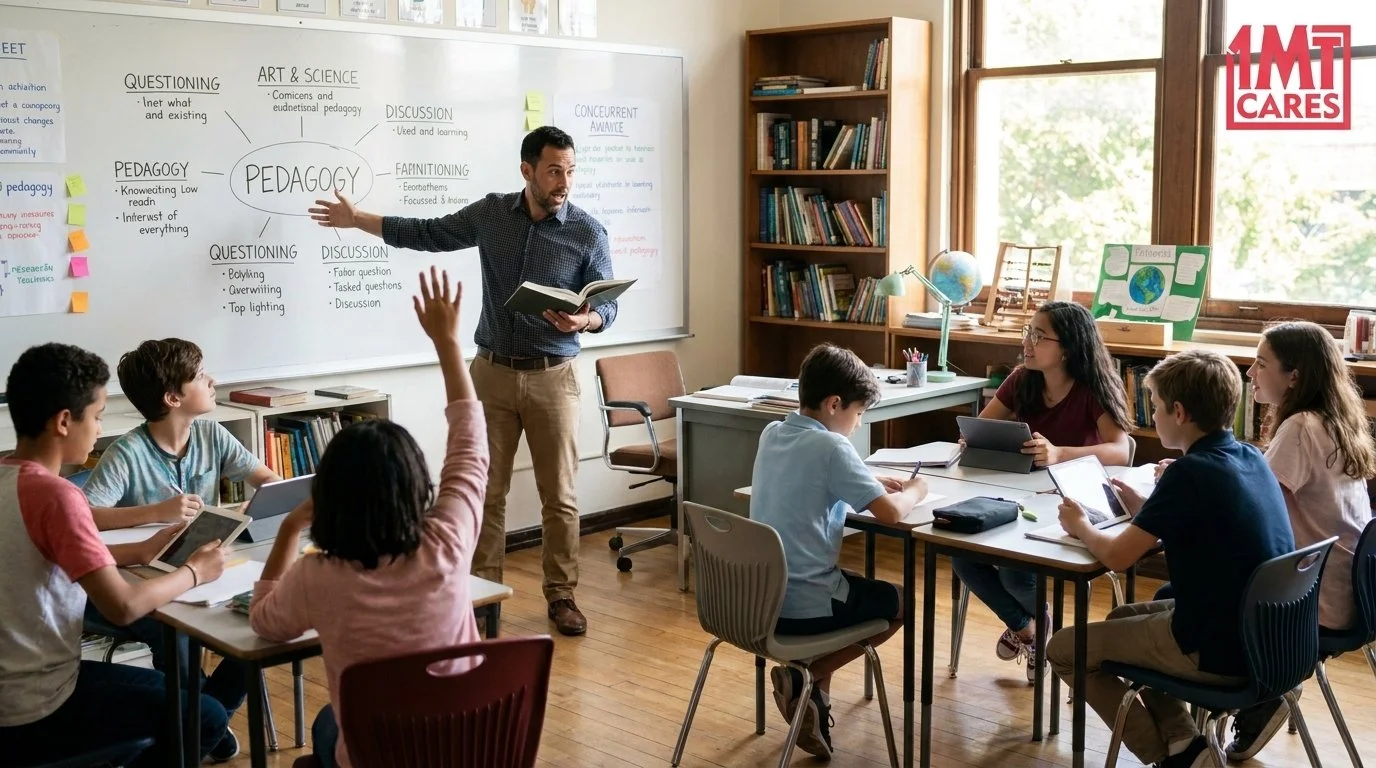
Pedagogy refers to the art, science, and practice of teaching, the deliberate methods and strategies educators use to facilitate meaningful learning. Derived from the Greek words pais (child) and agogos (leader), pedagogy originally described the guidance of children. Today, the term encompasses all learners and all educational contexts.
Pedagogy Meaning in Urdu
In Urdu, pedagogy is best understood as "فنتدریس" the art of teaching, or more formally as "تعلیمیطریقہ کار" (educational methodology). Pakistani educators enrolled in teacher training courses often encounter the concept under the heading of "تدریسیحکمت عملی" (teaching strategy) in national curriculum frameworks.
Types of Pedagogy Every Educator Should Know
Pedagogy is not a single, fixed approach. Modern teacher training programs categorize it into several distinct types, each grounded in a different philosophy of how learning happens.
1. Constructivist Pedagogy Rooted in the work of Jean Piaget and Lev Vygotsky, constructivism holds that learners actively build knowledge through experience. Teachers trained under this model design discovery-based, inquiry-driven lessons rather than passive lectures.
2. Collaborative Pedagogy Collaborative pedagogy prioritizes group learning, discussion, and peer-to-peer interaction. It develops critical thinking, communication, and social skills competencies emphasized in 21st-century classroom management training courses for teachers.
3. Socratic Pedagogy The Socratic method uses guided questioning to stimulate deeper reasoning. It is a cornerstone technique in teacher training institutes that focus on discussion-based and inquiry-led instruction.
4. Montessori Pedagogy Developed by Dr. Maria Montessori, this child-centred approach allows learners to guide their own exploration within a prepared environment. It is particularly influential in early childhood education and is covered in specialized Montessori teacher training tracks.
5. Critical Pedagogy Popularized by Paulo Freire, critical pedagogy encourages students to question social norms and power structures, developing independent thinkers rather than passive recipients of information.
Core Teaching Methods in Modern Education
Pedagogy is made visible through teaching methods, the practical techniques that bring theory into the classroom. Leadingteacher training programs develop competency across several foundational methods.
Direct Instruction is a teacher-led, structured explanation of concepts, and remains highly effective for foundational knowledge delivery, particularly in early grades where clear modeling matters most.
Differentiated Instruction means adapting content, process, and assessment to meet individual learner needs. In a country like Pakistan, where a single classroom can hold students of vastly different abilities and backgrounds, this skill is not optional; it is essential.
Project-Based Learning (PBL) asks students to tackle real-world problems, integrating multiple subjects while building higher-order thinking skills that go well beyond rote memorization.
Flipped Classroom models have students engage with content at home and apply knowledge in class, an approach increasingly supported by teacher training coursesonline that themselves model this very method.
Experiential Learning is learning through structured reflection on direct experience. It sits at the heart of every good teaching internship and practicum module, because the classroom itself becomes the most powerful teacher.
Read Blog: What Is Teacher Training? Definitions, Benefits, and Pathways in Pakistan
Why Pedagogical Training Matters for Teachers in Pakistan
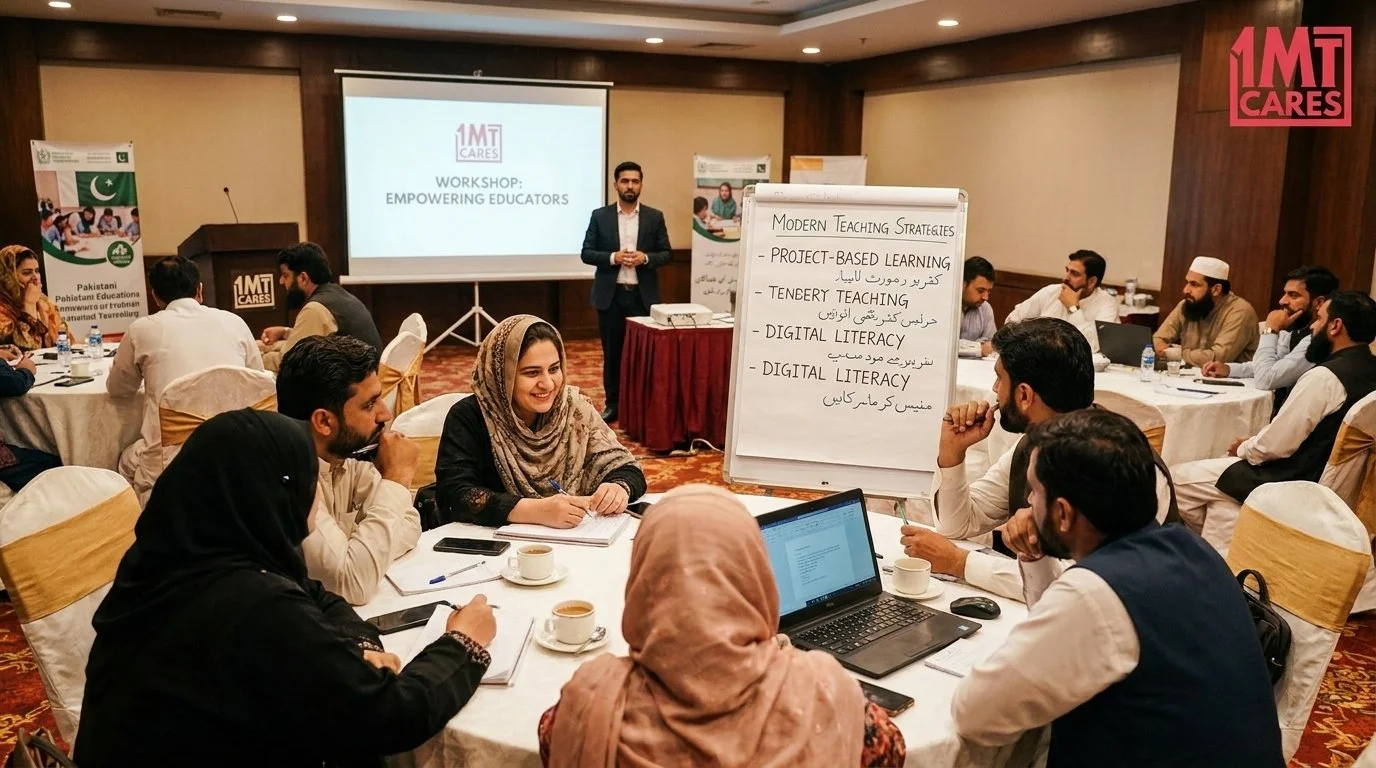
Strong pedagogical foundations do not emerge naturally; they are built through structured teacher training courses. And in Pakistan, the need has never been more urgent.
According to the Pakistan Education Statistics Report 2023–24, nearly one in four primary schools across the country operates with only a single teacher, a figure that rises to 45% in Sindh and 41% in Balochistan. In classrooms this stretched, a teacher who understands pedagogy does not just teach better; they multiply their own impact across dozens of children who would otherwise fall through the cracks.
The evidence from Pakistan's own classrooms backs this up. A 2025 RAND Corporation evaluation of Teach For Pakistan, the most rigorous study of teacher training impact in South Asia to date, found that students taught by pedagogically trained fellows outperformed peers in science by the equivalent of 16 months of additional learning, across 4,899 students in 80 public schools in Islamabad. In a separate initiative, over 80% of teachers who received structured pedagogical support rated it as highly effective, with student learning outcomes and classroom engagement improving visibly within the same term.
UNESCO's Global Education Monitoring Report has consistently highlighted that teacher quality is the single most influential in-school factor affecting student outcomes. For Pakistan, where hundreds of thousands of new teachers enter the profession each decade, equipping educators with evidence-based pedagogical skills is not optional; it is a national priority.
At 1MT Cares, our teacher training institute is built on this very conviction. Our programs bridge the gap between theoretical pedagogy and real classroom practice, supporting teachers across Pakistan to become more confident, effective, and purposeful educators.
What It Looks Like in a Real Classroom
Sana had been teaching at a government primary school in rural Islamabad for three years. Her lessons followed the pattern she had inherited from her own schooling, she explained; students copied, and the quieter ones drifted. After completing a structured pedagogical training program, she began using collaborative and inquiry-based approaches instead. She started asking questions before giving answers. She grouped students and let them work through problems together.
The change was not overnight, but it was real. Students who had never raised their hands began speaking. The classroom grew noisier in the best possible way. By the end of the term, her principal nominated her for the school's first teacher recognition award.
Stories like Sana's reflect what RAND Corporation researchers documented across dozens of trained teachers in Islamabad's public schools: that pedagogical training does not just change what teachers do, it changes who their students become.
Pedagogy vs. Andragogy: What's the Difference?
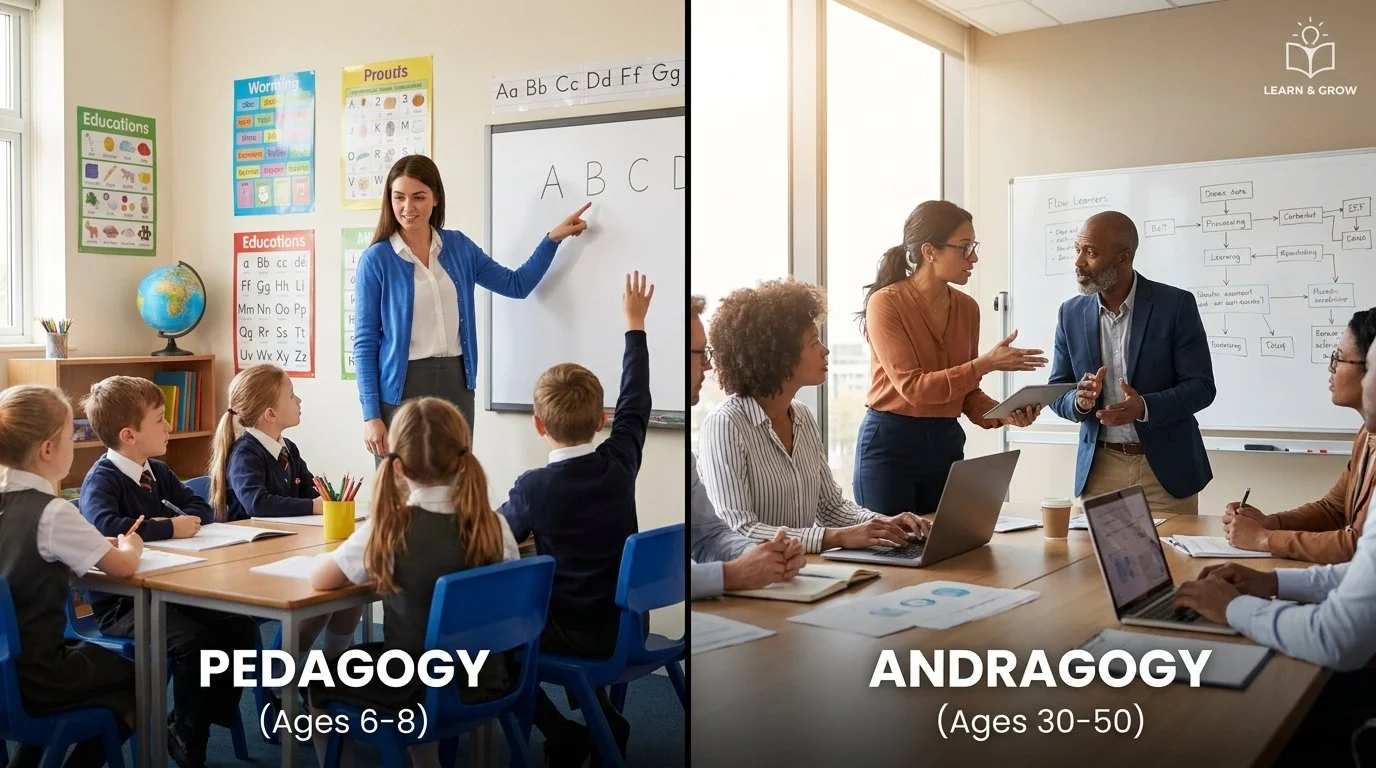
While pedagogy focuses on child learning, andragogy, a term coined by Malcolm Knowles, describes adult learning theory. Professional training courses for teachers increasingly integrate both frameworks, recognizing that adult teachers themselves need a learning environment that values prior experience, self-direction, and real-world application. These are the same principles that define the best teacher training courses online today, and they are worth keeping in mind every time an educator steps into a professional development room as a learner.
Conclusion: Pedagogy is the Foundation of Every Great Teacher
Pedagogy is not an abstract academic concept; it is the daily toolkit of every effective educator. Understanding its definition, recognizing its many types, and applying its methods transforms not just individual lessons but entire learning journeys. For teachers in Pakistan committed to professional growth, investing in structured teacher training programs that emphasize pedagogical depth is the clearest path to lasting classroom impact.
At 1MT Cares, we believe that when teachers grow, students flourish, and that growth begins with understanding how great teaching is built.
Also Read: What is Non-Formal Education: Examples & Importance
